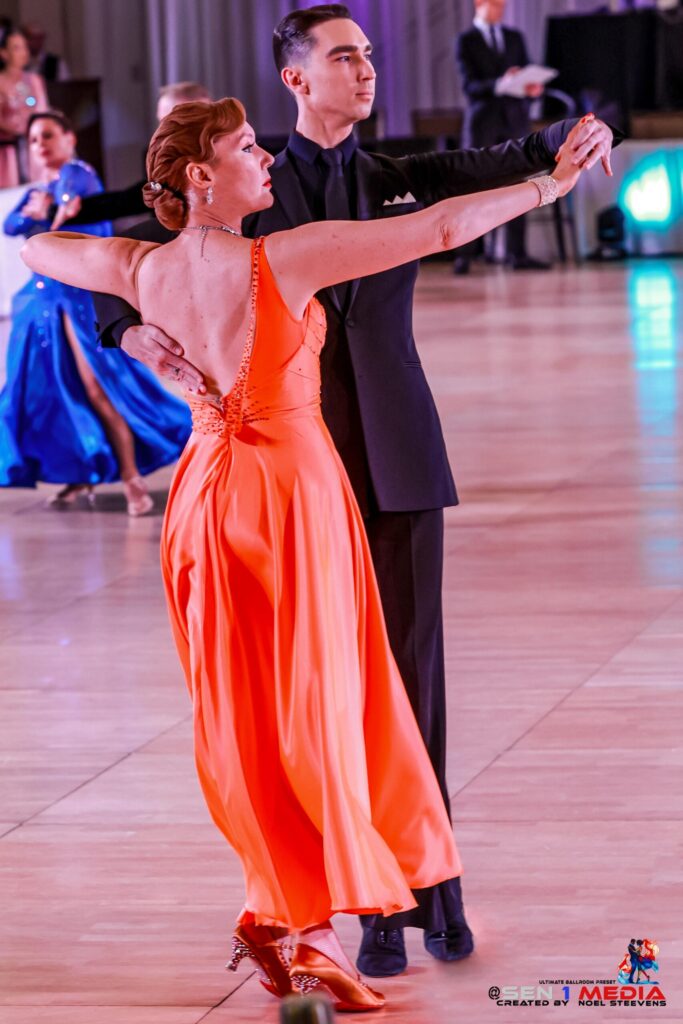
Some people grow up knowing exactly where they belong. For Tatiana, that sense of belonging arrived later in life, through music, movement, and the quiet beauty of ballroom dance.
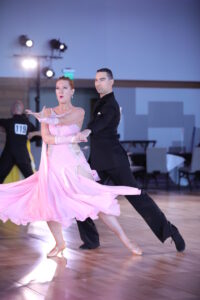
Tatiana was born in a small town in northern Sakhalin Island in what was then the Soviet Union and is now Russia. At eighteen, she moved to Vladivostok to attend Far Eastern State University. That city became the backdrop of her youth and some of her most meaningful years, and she still considers it home in many ways. Seattle now feels surprisingly familiar as well, with its water, soft gray skies, and natural landscape echoing something she knows deeply.
Amidst that background, music was always present in Tatiana’s childhood. Her mother was a kindergarten music teacher, so rhythm and melody were just part of everyday life. Tatiana studied piano in music school and completed her training, though music remained something she understood more than something she was emotionally drawn to.
Movement came later. As a young adult, she became curious about physical activity and tried tennis, which she enjoyed but could not continue through university. After moving to the United States, she explored other forms of exercise, but nothing felt quite right, either too mechanical or not emotionally engaging enough.
Then she discovered dance.
At first, it was simply the beauty of it. The music, the dresses, and the feeling of two people moving as one. She attended a few group classes with her then boyfriend, now husband, but dancing remained casual until she returned to it on her own at forty three.
What began as Argentine Tango and Salsa quickly expanded. Within months, Tatiana was learning sixteen dances and discovering a natural pull toward the art form she had not expected. Suddenly she was a social dancer, in American Smooth and Rhythm, as well as club dances. Showcases at this point were especially meaningful. filled with music, costumes, and a sense of celebration. At that stage, it was never about competition, only joy.
Everything changed when she joined Aria Ballroom in late 2021.
Working with her instructor Misha gave her a new understanding of dance. What once felt purely expressive became structured and intentional. She began to understand technique, mechanics, and how clarity in movement creates freedom rather than limits it.
Her first major competition was the Summit Dance Championshipsl in 2022. From there, competing became a way to measure growth and stay inspired rather than a source of pressure.
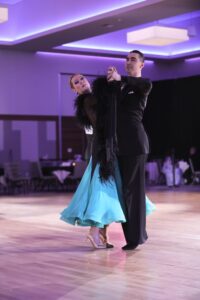 Today, Tatiana dances Smooth and Standard, the styles that feel most natural to her. Viennese Waltz remains her favorite because of its floating, effortless quality. Standard Viennese Waltz, in particular, feels timeless and majestic, especially when watching professionals perform it.
Dance has become the only form of physical activity she has ever truly loved. It is constantly evolving, always challenging, and never the same twice. Looking back at earlier videos shows her how far she has come, while watching professional couples reminds her what is possible.
She is currently transitioning into Open Standard, approaching it with patience and curiosity. Rather than rushing long term goals, she prefers to grow year by year and continue competing as opportunities arise.
One of her proudest accomplishments is placing higher than expected at Ohio Star Ball among some of the strongest dancers in the country. Even more meaningful, however, is the personal growth dance has brought. Naturally introverted, Tatiana has slowly become more comfortable being seen, one step at a time.
Outside of the ballroom, life is quiet. She once returned briefly to tennis, but stopped when she realized she was holding back out of fear of injury. That clarity made her priorities simple.
With a demanding career, dance has become her escape, a place where focus replaces stress and movement replaces everything else.
Tatiana is deeply grateful for her studio and instructors, and for a space where she can continue to grow. Ballroom came later in her life, but it has become something lasting, grounding, and deeply meaningful.